Nutritional state-dependent modulation of Insulin-Producing Cells in Drosophila
This is the third manuscript in our IPC modulation Triptychon, in which Rituja tackled the question how IPCs are modulated by the nutritional state and how they affect foraging behavior. Among other things, we demonstrate that Drosophila IPCs display an ‘incretin effect’, in that they respond strongly to glucose ingestion but not perfusion. This is a fundamental property of the modulation of insulin release in vertebrate species, and opens the door for us to investigate this crucial metabolic principle using our in-vivo physiology approaches in flies.
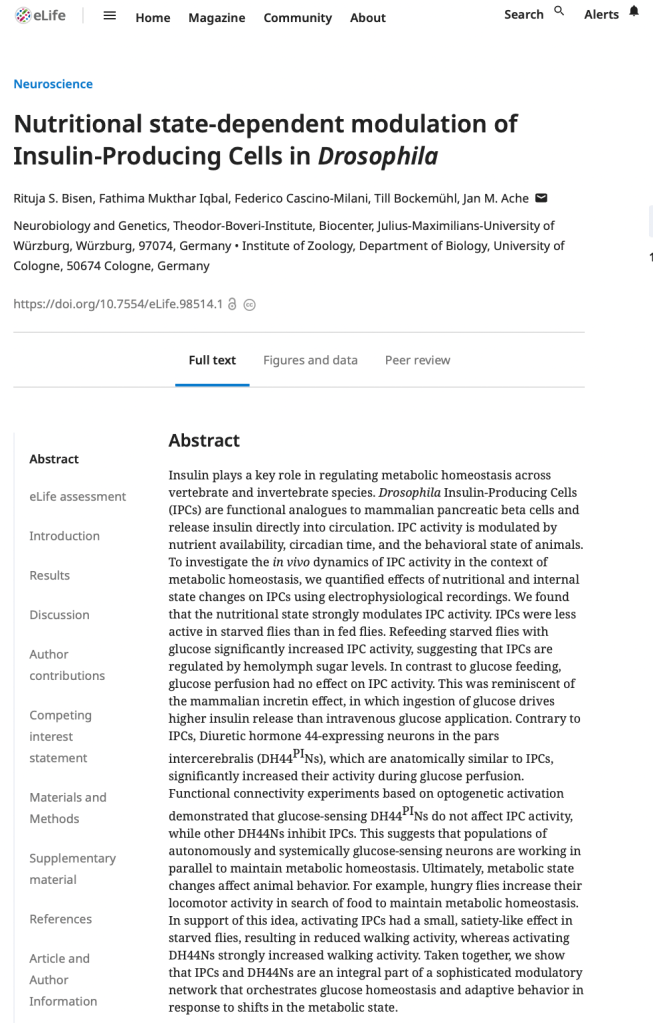
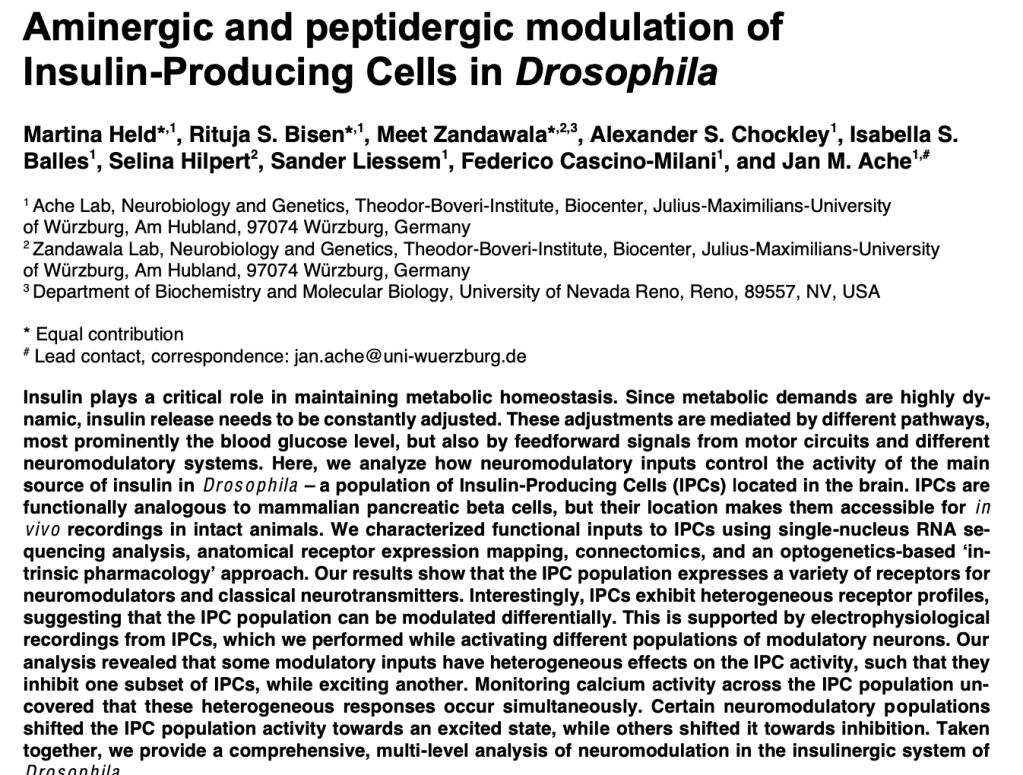
Aminergic and peptidergic modulation of Insulin-Producing Cells in Drosophila
This is the second manuscript in our IPC modulation Triptychon, in which Tina, Rituja and Meet investigated how IPCs are modulated by other populations of modulatory neurons. This paper combines a number of methods to unravel IPC modulation on different levels. We demonstrate how IPC activity is shifted by modulatory inputs and that the IPCs are a heterogeneous population.
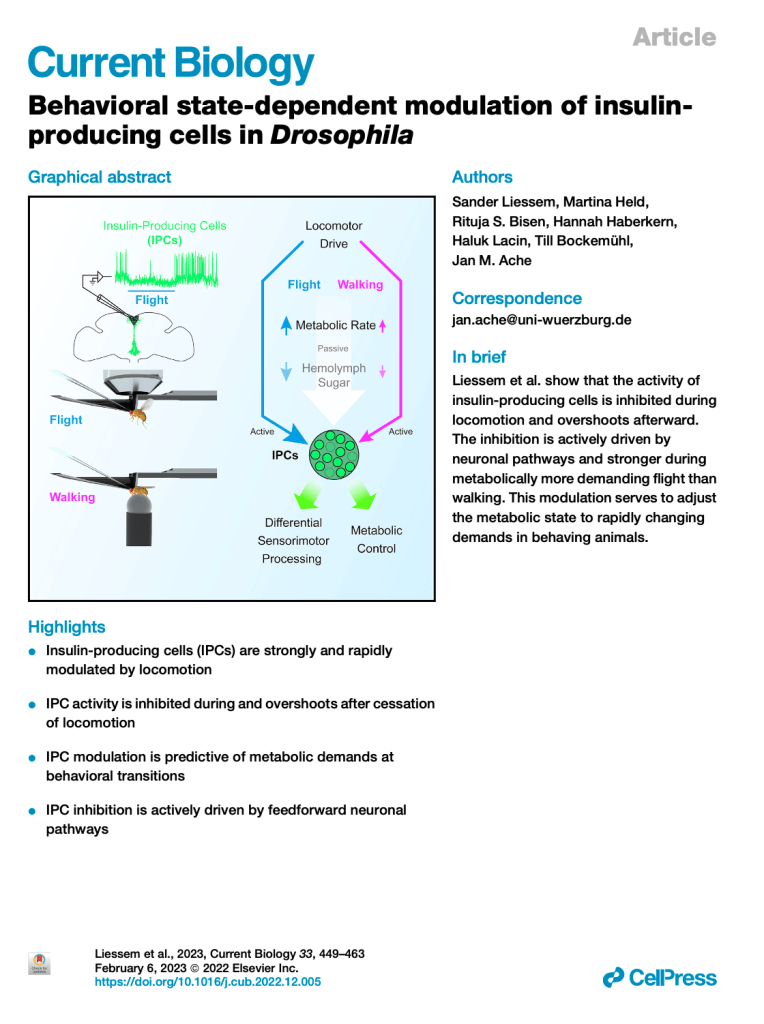
Behavioral state-dependent modulation of Insulin-Producing Cells in Drosophila
This is the first manuscript in our IPC modulation Triptychon, in which Sander quantified the behavioral state-dependent modulation of IPCs. The core take home message here is that IPCs are inhibited during locomtion, as demonstrated for flight, spontaneous walking, and optogenetically controlled backward walking. Importantly, we show that IPC modulation is predective, in that IPCs are also inhibited upon optogenetic activation of motor networks ex-vivo, in the absence of any actual muscle contractions of movements.
 Ache Lab